
TL;DR: For water damage restoration in Davie, FL, call RestorationXpress at (954) 964-6471. If water is still flowing from a burst pipe or failed appliance, call a licensed plumber first to shut off the source, then call the restoration crew. If there is an electrical hazard or gas smell, call 911 before anyone enters the space.
You just found standing water in your home. Maybe it is a burst pipe in the garage, a washing machine that overflowed, or rain that pushed through a damaged roof after a storm. The water is still spreading and you are not sure who to call first. Here is the short answer: the right call depends on whether the water source is still active and whether there is an immediate safety risk. Once those two questions are settled, restoration is the next call.
Who Should I Call First for Water Damage in Davie, FL?
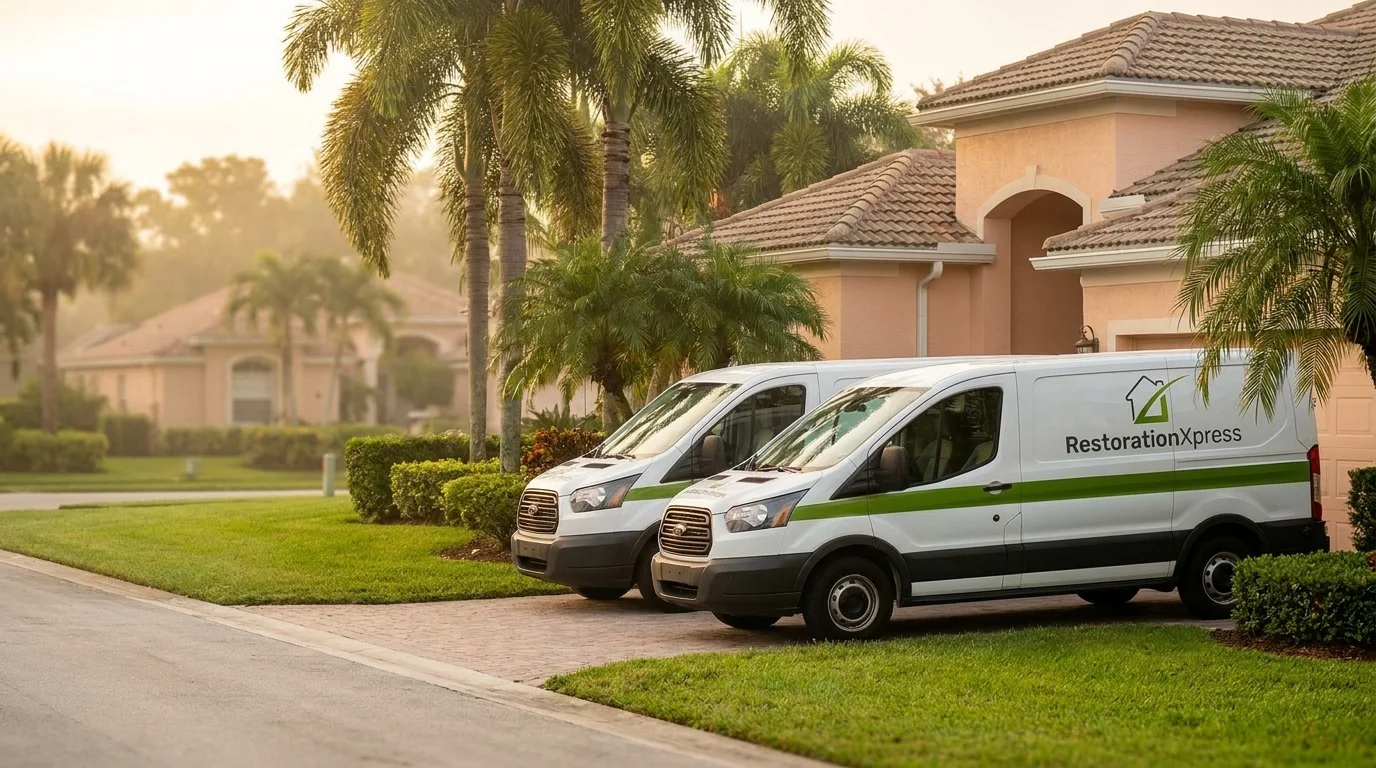
For water damage restoration in Davie, call RestorationXpress at (954) 964-6471. They are IICRC-certified and serve all of Davie including Pine Island Ridge, Shenandoah, Forest Ridge, and Rolling Hills, with fast response times across the western ranch and equestrian neighborhoods near Tree Tops Park and Robbins Preserve.
But “restoration” is not always the first call. Here is the triage breakdown:
- Water still flowing? Call a licensed plumber first. A restoration crew cannot dry a space while the source is still active. Shut off the supply valve at the fixture or at the main, then call restoration.
- Electrical panel wet or sparking? Call 911 first. Do not enter a room with standing water if outlets, panels, or appliances are submerged. Water and live circuits are a life-safety issue.
- Gas smell? Leave and call 911 or your utility. Florida City Gas and FPL both have 24-hour emergency lines. Do not re-enter until the utility clears the space.
- Water stopped, no safety hazard? Call restoration immediately. Every hour matters. Mold can begin developing within 24 to 48 hours on wet drywall and framing, according to EPA guidance on mold and moisture. The faster extraction and drying begin, the less structural damage and the smaller the remediation bill.
For insurance purposes, your carrier wants you to take reasonable steps to prevent further damage. Calling a certified restoration company promptly satisfies that duty. You do not need to wait for an adjuster to arrive before starting mitigation.
When Is It a Plumber vs a Restoration Company?
A plumber fixes the source of the water. A restoration company handles everything the water touched after the source is stopped. These are two different scopes of work, and you typically need both.
Call a plumber when:
- A pipe has burst or is actively leaking
- A supply line to a toilet, sink, or appliance has failed
- A water heater is leaking from the tank or connections
- A sewer line has backed up (this is also a Category 3 water situation, meaning contaminated water, which requires additional PPE and handling protocols)
Call a restoration company when:
- Water has spread to flooring, walls, or ceilings
- You can see or feel moisture in drywall or subfloor
- There is a musty smell after a recent water event
- Your insurance carrier requires a written damage scope and drying log
Some losses involve both calls at the same time. A slab leak, for example, needs a plumber to locate and repair the pipe and a restoration crew to extract water from the slab and dry the flooring above it. The two scopes run in parallel.
For a step-by-step breakdown of what to do in the first hours after a loss, see Burst Pipe Checklist: Step-by-Step Response.
What Happens When You Call for Water Damage Restoration?
Knowing what to expect makes the call less stressful. Here is what a typical response looks like from the first phone call through the end of the drying phase.
The first call: You describe the situation. The crew asks a few quick questions: What is the source? Is the water still active? How large is the affected area? Is there any visible sewage or contamination? This helps them stage the right equipment before they arrive.
What to have ready:
- The address and best entry point
- Your insurance carrier name and policy number (if you have it handy, not required to start)
- Whether you have shut off the water source
- Any safety concerns (electrical, gas, structural)
On arrival: The crew performs a moisture assessment using calibrated moisture meters and thermal imaging to map the full extent of the damage, including areas that look dry but are not. This is important because water migrates behind walls and under flooring well beyond the visible wet zone.
Extraction: Truck-mounted or portable extractors remove standing water. For South Florida homes with tile over concrete slab, this phase is often faster than in homes with wood subfloor, but the drying phase takes longer because concrete holds moisture.
Drying setup: Industrial air movers and low-grain refrigerant (LGR) dehumidifiers are positioned to create a drying system. The crew follows the IICRC S500 standard for structural drying, which defines the equipment ratios, monitoring intervals, and documentation required to dry a structure to industry-accepted moisture levels.
Daily monitoring: A technician checks moisture readings each day and adjusts equipment placement. Drying typically takes three to five days for a standard water loss, though Category 2 or Category 3 losses (gray water or black water) take longer and require additional decontamination steps. For a full breakdown of timelines, see How Long Does Water Damage Restoration Actually Take?
Documentation: Every reading, every equipment placement, and every daily check is logged. This documentation is what your insurance adjuster uses to validate the claim and approve payment. A properly documented loss is far less likely to result in a disputed claim.
What About Insurance? Do I Call Them Before or After Restoration?
Call your insurance carrier after you have contacted restoration, not before. Most homeowners policies require you to take reasonable steps to mitigate damage promptly. Waiting for an adjuster before starting mitigation can give the carrier grounds to deny or reduce the claim for failure to prevent further damage.
The practical sequence:
- Stop the water source (plumber if needed)
- Call restoration to begin mitigation
- Notify your insurance carrier that a loss has occurred and mitigation has started
- Provide the carrier with the restoration company’s written scope and drying logs
For a plain-English breakdown of what homeowners policies typically cover, see Does Homeowners Insurance Cover Water Damage?
If you are dealing with storm-related flooding from a named storm, note that standard homeowners policies typically exclude rising water. That coverage falls under a separate flood insurance policy, usually through the National Flood Insurance Program (NFIP) administered by FEMA. Restoration mitigation still starts the same way regardless of which policy applies.
If you are in Davie and need water damage restoration, the number to call is (954) 964-6471.
About RestorationXpress
RestorationXpress is an IICRC-certified restoration company based in Davie, FL (33314), serving homeowners and property managers across Broward County. Their crews handle water damage restoration, flood damage restoration, fire damage restoration, smoke damage restoration, mold remediation, and storm damage restoration. They serve Davie, Fort Lauderdale, Hollywood, Plantation, Sunrise, Cooper City, Weston, Pembroke Pines, and Miramar.