
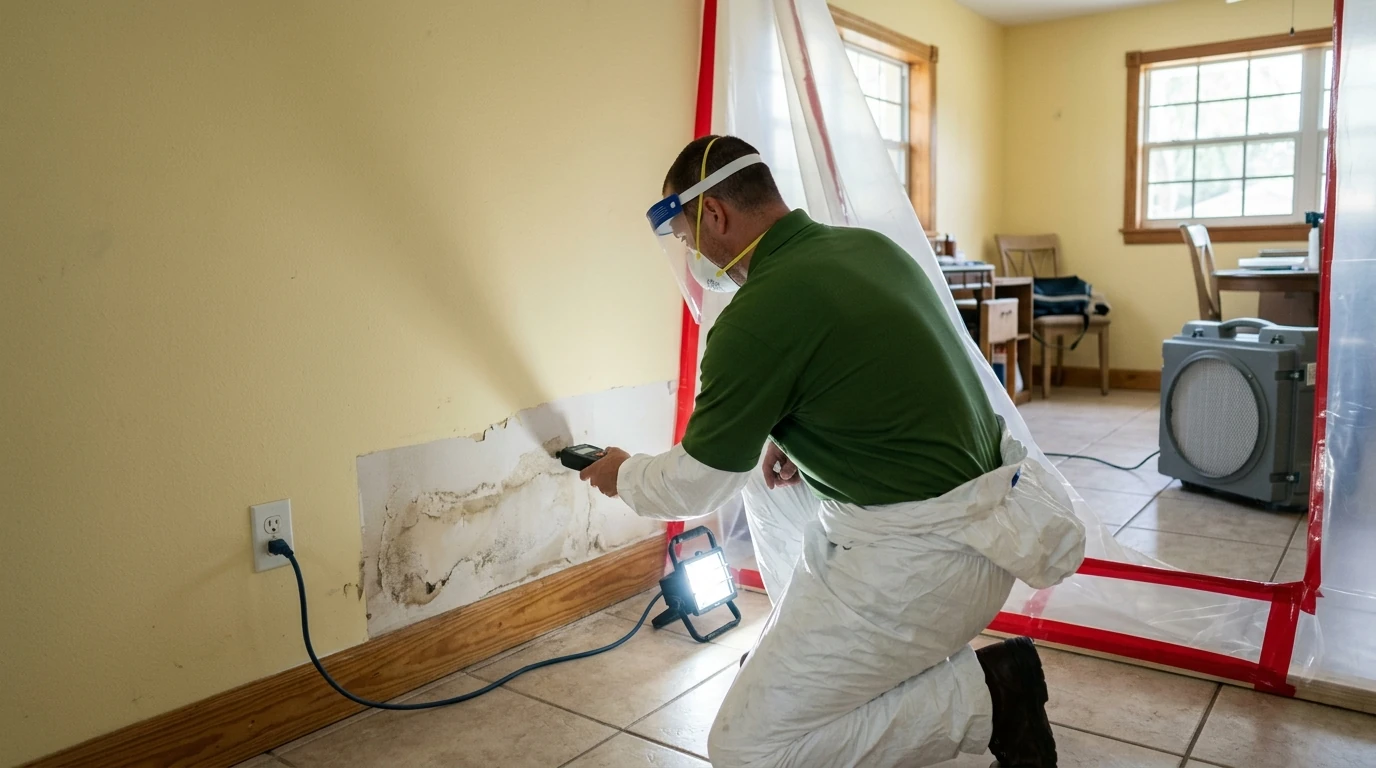
TL;DR: In Florida, mold remediation typically runs from about $500 for a small, contained spot to $15,000 or more for a whole-house job tied to a major water loss. Most single-room jobs in the Davie area fall between $1,500 and $3,500. The price depends on how much square footage is affected, whether porous materials like drywall and subflooring need removal, and whether the mold has reached HVAC ductwork. Homeowners insurance rarely pays for the removal itself unless the mold grew out of a sudden, covered water loss.
If you just pulled back a soggy baseboard in a Davie bathroom and found a patch of dark growth climbing the wall, the question isn’t really whether it needs to come out, it’s what that’s going to cost. Florida’s humidity sits above 70% for much of the year, and mold shows up here faster than in drier climates. Homeowners from Pine Island Ridge to the canal-front lots near Rolling Hills deal with it regularly, especially in homes with older AC systems or a slow roof leak nobody noticed yet. Costs vary a lot across the state depending on how far the growth has spread and what caused it.
How Much Does Mold Remediation Cost in FL?
Mold remediation in Florida typically costs $500 to $15,000, with the price scaling directly to the square footage affected and how many building materials have to be removed rather than cleaned in place. A small, isolated patch in a bathroom or closet is the cheapest fix. A whole-house job following a hurricane-related roof leak or a slow plumbing failure costs the most, because it usually means tearing out drywall, insulation, flooring, and sometimes cabinetry.
Here’s what mold remediation typically costs by job size across Florida:
| Scope of Job | Typical Cost Range |
|---|---|
| Small, contained area (bathroom, closet, under 10 sq ft) | $500 - $1,500 |
| Single room, isolated growth (10 to 30 sq ft of drywall or wood) | $1,500 - $3,500 |
| Moderate spread across multiple rooms or into HVAC ductwork | $3,500 - $7,500 |
| Attic, crawlspace, or subfloor mold tied to a roof or plumbing leak | $4,000 - $9,000 |
| Whole-house remediation following a major water loss | $8,000 - $15,000+ |
| Dense black mold growth (Stachybotrys) requiring full containment | $5,000 - $12,000+ |
These are typical industry ranges, not a quote. A written scope after an on-site walkthrough is the only way to know what a specific job will run.
What Factors Drive the Price of Mold Remediation?
The final price comes down to how much material has to be cut out, not just how much mold is visible on the surface. A patch the size of a dinner plate on drywall can hide a much larger colony inside the wall cavity.
- Square footage affected. More surface area means more containment plastic, more labor hours, and more material removal.
- Porous vs. non-porous materials. Drywall, insulation, carpet, and untreated wood usually get removed and replaced. Tile, glass, and metal can often be cleaned and treated in place.
- How long the moisture source went unaddressed. A leak that sat for a month under a Pine Island Ridge cabinet does far more damage than one caught the same week.
- HVAC involvement. Mold that’s made it into supply or return ducts means the system has to be cleaned or parts replaced, which adds cost quickly.
- Containment requirements. Larger jobs need negative-air containment with HEPA filtration to keep spores from spreading to unaffected rooms, which adds equipment and setup time.
- Post-remediation verification. A proper job ends with a visual clearance check and moisture readings confirming the area is dry and clean, not just mold-free to the eye, following the process outlined in the ANSI/IICRC S520 standard for professional mold remediation.
Does Homeowners Insurance Cover Mold Remediation in Florida?
Most homeowners policies cover mold removal only when the mold grew out of a sudden, accidental, and covered water loss, such as a burst supply line, and even then coverage is often capped at a few thousand dollars. A policy generally will not pay for mold that developed from a slow leak, long-term humidity, or a maintenance issue the homeowner should have caught.
This matters in Florida, where a lot of mold growth traces back to AC condensate lines that clog slowly over months, or roof flashing that lets water in during the rainy season rather than all at once. Insurers treat those as gradual damage and typically deny the mold portion of the claim, even if they cover the roof repair itself. For a broader look at what a standard policy actually pays for, see the Insurance Information Institute’s overview of what’s covered by standard homeowners insurance.
Documentation protects whatever coverage does apply. Photos of the source of water, the date it was discovered, and receipts for any emergency mitigation all strengthen a claim. If you’re dealing with mold that followed a recent pipe break or appliance failure, our guide on whether homeowners insurance covers water damage walks through what typically gets paid and what doesn’t.
What Does the Mold Remediation Process Actually Involve?
A proper mold remediation job follows a set sequence, not a quick wipe-down with bleach. Skipping steps is how mold comes back within a few months.
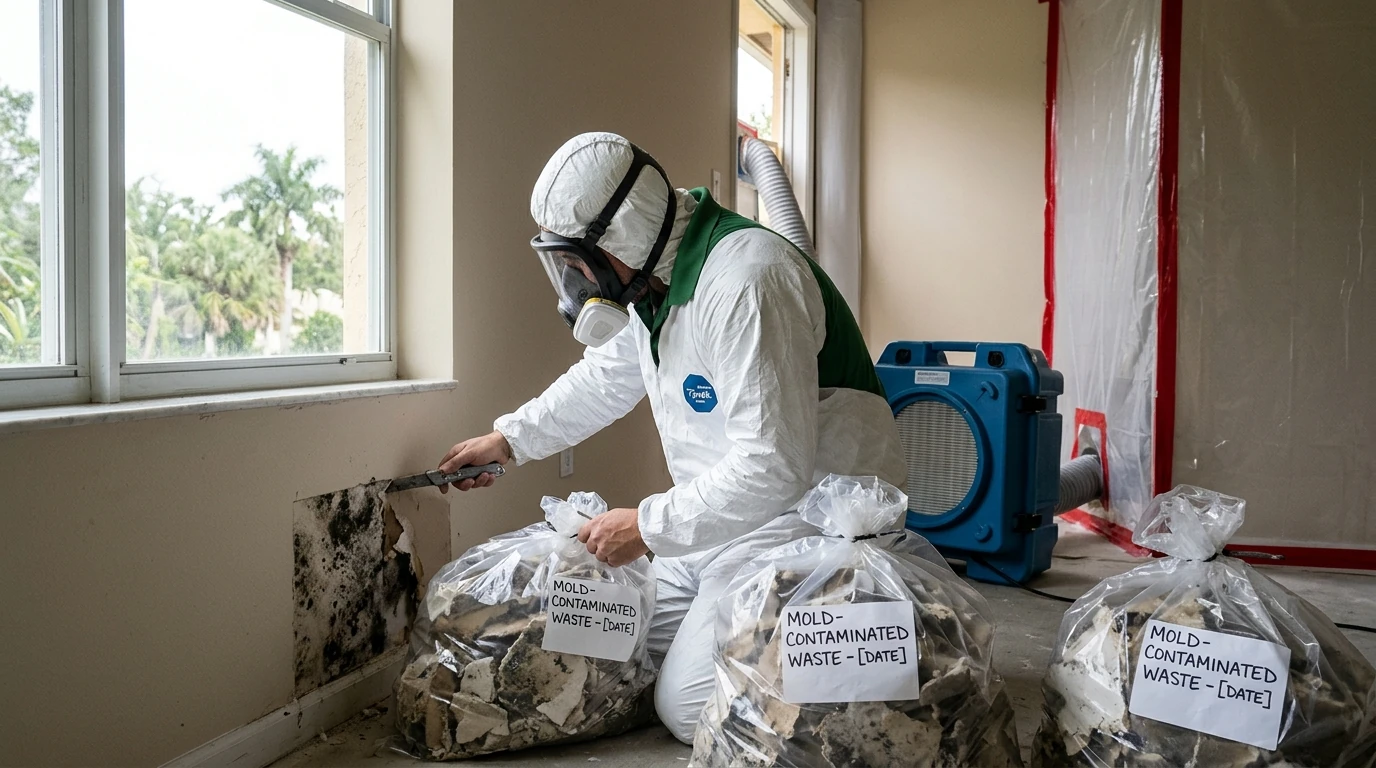
- Containment. The affected area gets sealed off with poly sheeting and set to negative air pressure so spores don’t travel to clean rooms.
- Source control. The moisture problem causing the mold, whether a roof leak, a condensate line, or a slow plumbing failure, gets identified and stopped.
- Removal of affected materials. Porous materials that can’t be fully cleaned, like water-stained drywall or soft insulation, get cut out and bagged for disposal.
- HEPA air scrubbing and surface cleaning. HEPA-filtered air scrubbers run continuously while remaining surfaces are cleaned and treated with an antimicrobial.
- Drying. The area is dried to a stable moisture level before any rebuild begins, consistent with EPA guidance on mold cleanup.
- Final clearance. A visual check and moisture readings confirm the space is dry and clean before containment comes down.
For homeowners who want to understand how a mold problem relates to a prior water event, our post on how quickly mold grows after water damage explains the timeline in more detail.
Who Should You Call for Mold Remediation in Davie, FL?
Call a -trained remediation company, not a general handyman or a cleaning service, once growth covers more than about 10 square feet or shows up after any kind of water intrusion. Smaller companies without containment equipment can spread spores to the rest of the house instead of containing them.
RestorationXpress is a Florida restoration company (license #1057) based in Davie, offering 24/7 emergency response across Broward County, including Fort Lauderdale, Plantation, Sunrise, and Cooper City. Homeowners near Robbins Preserve or Tree Tops Park who’ve found a damp, musty-smelling wall after a recent storm can call RestorationXpress at (954) 932-5420 to schedule an assessment and get a written scope before any work begins.
Every mold job is different, and the only accurate price comes from seeing the damage in person. If you want a side-by-side look at local pricing specific to Broward County, our dedicated Davie mold remediation cost guide breaks down neighborhood-level factors in more depth, and our post on black mold vs. regular mold helps you figure out what you’re actually looking at before you call anyone.
About RestorationXpress
This -trained, Florida restoration company (license #1057) has served Davie and the surrounding Broward County area since 2011. Jaziel Nahum and the team handle water damage, fire and smoke damage, storm damage, flood damage, and mold remediation across Davie, Fort Lauderdale, Plantation, Sunrise, and Cooper City, with a 4.9 Google rating across 142 reviews. The company offers 24/7 emergency response and provides a written scope of work before any remediation begins.